Climbers crossing the Jamapa Glacier on Pico de Orizaba at sunrise
Flagship Expedition · 9 Days · Oct – Mar

Mexico's
Triple Crown

Iztaccíhuatl 5,230m · Pico de Orizaba 5,636m

Nine days. Three summits — two above 5,000m. The complete Althara experience — and the expedition most of our clients come back for.

Duration
9 Days
Max Altitude
5,636m · 18,491 ft
Price Per Person
From $3,900 USD
Group Size
4 – 8 Climbers
Season
October – March
Level
Advanced
Overview

The Complete Althara Experience

The Mexico Triple Crown is not a shortcut — it's the full picture. You begin on Iztaccíhuatl, one of Mexico's most iconic peaks, where you acclimatize and learn how this mountain demands your respect. Then you transfer to the base of Pico de Orizaba, the third highest peak in North America, and push for the glacier at 2am.

Three summits. Nine days built around acclimatization science, not convenience. La Malinche gets your body ready at 4,461m. Iztaccíhuatl proves what you're capable of at 5,230m. Then Pico de Orizaba — the glacier, the darkness, the crater rim at sunrise. Guided by Diego — 300+ personal summits on these specific volcanoes. Every technical decision, every weather read, every rope placement, made by someone who has been on this ice more times than he can count.

Professional expedition photography is included. Every summit, every sunrise, documented and delivered within two weeks.

The Itinerary

Every day on this expedition has a purpose — nothing is filler. The sequence is designed around acclimatization science and optimal weather windows.

Day 1
Puebla · 2,135m
Puebla — Team Briefing & Gear Check

You arrive to Puebla, one of Mexico's most beautiful colonial cities at 2,135m — already higher than Denver. Meet Diego and your team at the expedition guesthouse. The evening is intentional: rest, altitude orientation, and a shared dinner with your climbing partners.

Afternoon Arrive Puebla, transfer to guesthouse, room assignment
17:00 Full team briefing with Diego — expedition arc, summit strategy, altitude physiology, emergency protocols
18:00 Gear check and equipment fitting — crampons, ice axe, harness, layering system review
19:30 Pre-expedition dinner — early rest required
Arrival Day
Day 2
La Malinche Base · 3,048m
La Malinche — Arrive, Briefing & Rest

A relaxed morning departure from Puebla and a 90-minute drive delivers you to the cabins at the base of La Malinche at 3,048m. The rest of the day belongs to acclimatization by presence — no hiking required. Your body adjusts simply by being here. The afternoon is for briefing, gear prep, and sleep. Tomorrow starts before dawn.

10:00 Depart Puebla — relaxed start, drive through Tlaxcalan highland terrain to La Malinche base
12:00 Arrive cabins (3,048m) — settle in, lunch, unpack gear
15:00 Rest and passive acclimatization — no physical effort, hydration focus
17:00 Summit briefing for Day 3 — route, timing, turnaround policy, gear layering
19:30 Dinner and sleep — wake-up call at 04:00
Briefing & Rest
Day 3
La Malinche · 4,461m
La Malinche — Summit Day

Pre-dawn departure up La Malinche's main ridge. The terrain is non-technical — no glacier, no ice axe required — which makes this the purest altitude test of the expedition. Your pace, your breathing, your response above 4,000m. Diego watches all of it. Return to the cabins by midday for rest and recovery before the next phase.

04:30 Wake up — light summit breakfast, headlamps, depart cabins
05:00 Begin ascent — steady alpine pace up the main ridge
09:00 Summit La Malinche — 4,461m. First summit of the expedition. Photography, rest, take in the Iztaccíhuatl panorama ahead.
13:00 Return to cabins — hot lunch, full afternoon rest
Evening Debrief with Diego — notes on altitude response, adjustments for Izta
Summit 1 — 4,461m
Day 4
La Joya · 3,980m
Drive to Iztaccíhuatl — Base Camp Setup

A drive through Cholula and the highland pueblos leads you to La Joya trailhead at 3,980m — the gate to Iztaccíhuatl. You've already been above this altitude. Today feels different: the objective is bigger, the mountain dominates the skyline, and tomorrow starts before midnight. Gear review, skills check, early lights-out.

08:00 Depart La Malinche cabins — drive through Cholula and highland pueblos to La Joya trailhead
12:00 Arrive La Joya (3,980m) — settle into camp, lunch
13:00 Camp setup, hydration protocol, no unnecessary exertion
14:30 Technical skills review — crampon use, ice axe arrest, rope protocol for tomorrow
16:00 Summit briefing + dinner + sleep — wake-up at 23:00
Base Camp
Day 5
Iztaccíhuatl · 5,230m
Iztaccíhuatl — Summit Day

Pre-dawn departure in the dark, headlamps cutting the dry air. The sky shifts from black to deep blue as you gain altitude. The summit at 5,230m opens up the full volcanic corridor — Popocatépetl venting steam just 12km to the south. This is not a warm-up. This is a serious mountain. It also proves something: you're ready for what comes next.

23:00 Wake up — light breakfast, final gear layering
00:00 Depart camp — headlamps, full alpine pace
08:00 – 09:00 Summit Iztaccíhuatl — 5,230m. Popocatépetl panorama 12km south. Diego documents every step.
14:00 Return to La Joya trailhead
18:00 Transfer to Puebla — hot shower, hot meal, real bed
Summit 2 — 5,230m
Day 6
Puebla · 2,135m
Puebla — Full Rest Day

This day is not optional — it's built into the program by design. Two days from now you'll be standing on a glacier at 5,600m. Your body needs this. Sleep in, eat well, walk the colonial streets, visit the Zócalo. Puebla has more than earned a full day of your attention.

Morning Unstructured rest — sleep, eat, decompress. No agenda.
Afternoon Optional: Puebla colonial center, Mercado de Sabores, Cholula pyramid — all within 20 min
18:00 Team dinner — Pico de Orizaba briefing. Route overview, glacier protocols, final gear check.
21:00 Sleep — long haul begins tomorrow
Rest Day
Day 7
Piedra Grande · 4,260m
Drive to Tlachichuca — Base Camp

A 2-hour drive east from Puebla toward Veracruz leads to Tlachichuca, the last town before the mountain. Here, purpose-built 4x4 trucks take over — no regular vehicle makes it up the road to Piedra Grande. At 4,260m, with 200km of Mexico below, this is where the final chapter begins.

07:00 Depart Puebla — 2-hour drive to Tlachichuca (2,680m)
09:00 Arrive Tlachichuca — breakfast, rest, then transfer to 4x4 vehicles for high-clearance road to Piedra Grande
12:30 Arrive Piedra Grande hut (4,260m) — settle in, lunch, gear layout
14:00 Final summit briefing — crampon technique, rope protocols, strict turnaround rules
16:00 Dinner and sleep — wake-up at 23:00
Base Camp
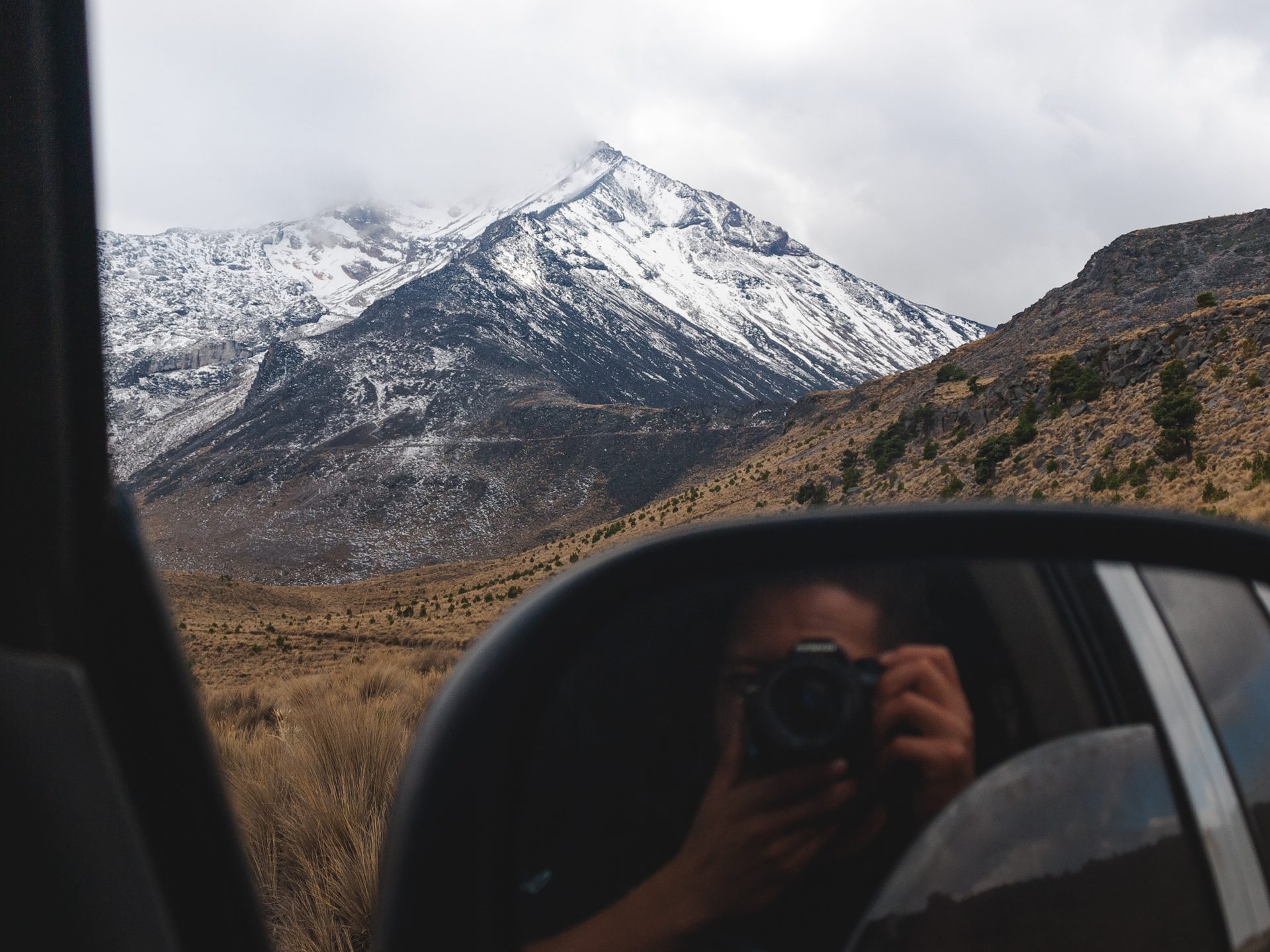
Day 8
Pico de Orizaba · 5,636m
Pico de Orizaba — Summit Day

This is the one. A 12am departure from Piedra Grande. You cross the Jamapa Glacier in full darkness — nothing but headlamps, the crunch of crampons on ice, and 200km of Mexico disappearing below you. The crater rim appears at first light. This is the third highest peak in North America, and you just stood on it.

23:00 Wake up — summit breakfast, full cold weather layering, gear final check
00:00 Depart Piedra Grande — full darkness, headlamps, full alpine pace
08:00 – 09:00 Summit Pico de Orizaba — 5,636m. Crater rim at sunrise. 200km of Mexico below. Diego documents every step.
14:00 Return to Piedra Grande hut — pack down
19:00 Celebration dinner in Tlachichuca with the full team
Summit 3 — 5,636m · North America's 3rd Highest
Day 9
Tlachichuca · 2,680m
Tlachichuca — Return to CDMX

The expedition is over. Breakfast in Tlachichuca, then a 3-hour drive back to Mexico City. Your edited expedition photo set will be delivered within two weeks — every frame Diego captured across all three mountains.

Morning Breakfast in Tlachichuca — last meal together as a team
09:00 Depart Tlachichuca — 3-hour drive to Mexico City
12:00 Arrive CDMX — transfer to airport or hotel, coordinate with Diego for timing
Within 2 wks Edited expedition photo set delivered — all three summits, fully documented
Departure Day

Included & Not Included

🧭
Lead Guide — Diego

All expeditions led by Diego personally. 300+ summits on these volcanoes. Not a generalist — someone who knows every weather pattern, every route variation, every risk.

🏕
All Mountain Accommodation

High camp and mountain huts on both volcanoes. Full logistics from Puebla — transport, meals on the mountain, everything handled.

🥾
Technical Equipment

Crampons, ice axes, ropes, and group safety gear. You bring your personal clothing, boots, and base layers — we handle all technical hardware.

📸
Expedition Photography

Edited photo set from both summits, delivered within two weeks. Shot by Diego on the mountain. Every major moment, documented.

📋
Pre-Trip Preparation

Training protocol, gear checklist, altitude guide, and a pre-trip call with Diego. You arrive prepared — not figuring things out at basecamp.

🚐
All Ground Transport

All transport from Puebla city center to both trailheads and base camps. You fly in — we drive the rest.

✈️
Not Included: International Flights

Flights to Mexico City (MEX) or Puebla (PBC) are not included. Direct flights available from most major US cities — typically under 4 hours from the Southwest.

🏙
Not Included: City Hotels

Pre and post-expedition accommodation in Puebla is not included. We recommend trusted guesthouses and can connect you with partners on request.

👟
Not Included: Personal Gear

Personal clothing, boots, and layering system. A detailed gear list is sent immediately after booking — nothing will be a surprise.

Who This Is For

Fitness & Experience

The Mexico Triple Crown is designed for experienced outdoor athletes — not for first-time hikers. If you're unsure about your level, that's exactly what a pre-expedition call with Diego is for.

Required Experience
  • Prior experience hiking above 4,000m (13,000 ft) or at 14er level
  • Comfortable with steep, exposed terrain and long summit days (10–12 hrs)
  • No prior glacier or technical climbing experience required — Diego teaches the skills on-site
  • Good physical condition: capable of 6–8 hrs sustained aerobic effort
Recommended Preparation
  • Begin cardio-specific training 8–12 weeks before the expedition
  • Regular hiking with a loaded pack (6–8 kg) on varied terrain
  • Stair climbing or incline treadmill sessions for leg endurance
  • Pre-expedition call with Diego to review your specific fitness background

Before You Apply

I've done 14ers in Colorado. Is this a step up?

Yes — but a manageable one. The 14ers top out around 4,400m; Pico de Orizaba is at 5,636m. The extra 1,200m matters physiologically. The glacier crossing also adds technical elements you won't find on a standard 14er. That said, climbers with solid 14er experience regularly summit Orizaba with Althara. The key is the acclimatization sequence built into this expedition — Iztaccíhuatl first, then Pico.

Is Mexico safe for this kind of trip?

The regions where we operate — Puebla state and the Orizaba volcanic corridor — are among the safest in Mexico, with strong local infrastructure and low tourist-related incidents. Diego has guided American and international clients through this area for years without incident. The mountains themselves have standard alpine risks: weather, altitude, cold. Those are managed through experience, preparation, and conservative summit windows.

Do I need technical climbing skills before I arrive?

No. Diego teaches crampon technique, ice axe use, and glacier movement during the expedition — you don't arrive needing these skills. What you do need is solid aerobic fitness and experience on steep, non-technical terrain. The glacier on Pico is a walking glacier at the grades we ascend — technical but not requiring prior rock climbing or ice climbing background.

What happens if weather doesn't allow a summit attempt?

Expedition dates are scheduled during optimal weather windows (Oct–Mar). Diego monitors forecasts throughout the trip and makes go/no-go calls based on current conditions, not a fixed schedule. If a summit window is missed, we exhaust all options within the expedition timeline before considering alternatives. This is covered in detail during your pre-trip call and in the booking terms.

Ready to Start

Plan This
Expedition

The first step is a conversation. Tell Diego about your background, your timeline, and what you're looking for. No commitment required.

Plan This Expedition → ← Back to All Expeditions
Spots limited to 8 per group · Season: Oct – Mar